




Contemporary Wine Cellar Design and Construction
A contemporary wine cellar can take up one wall of a dining room or give you an entire room to walk into and choose a bottle. The starting point is what you want to see when you look at it. If you’d like to read the labels from the dining table, the direction the bottles face matters as much as the glass in front of them. If you buy wine by the case, you may want a small display for favorites and deeper storage for the rest.
Harvest Wine Cellars and Saunas creates stunning contemporary wine cellar designs for our residential and commercial clients.
What gives a wine cellar a contemporary look?
In contrast to traditional wine cellars, which heavily feature wood in their racking and other design elements, contemporary wine cellar designs have a much more modern look and feel. They can include elements from traditional cellars, but allow much more freedom in their design options. Glass walls and doors are popular choices, as are the many options of metal racking that are available.
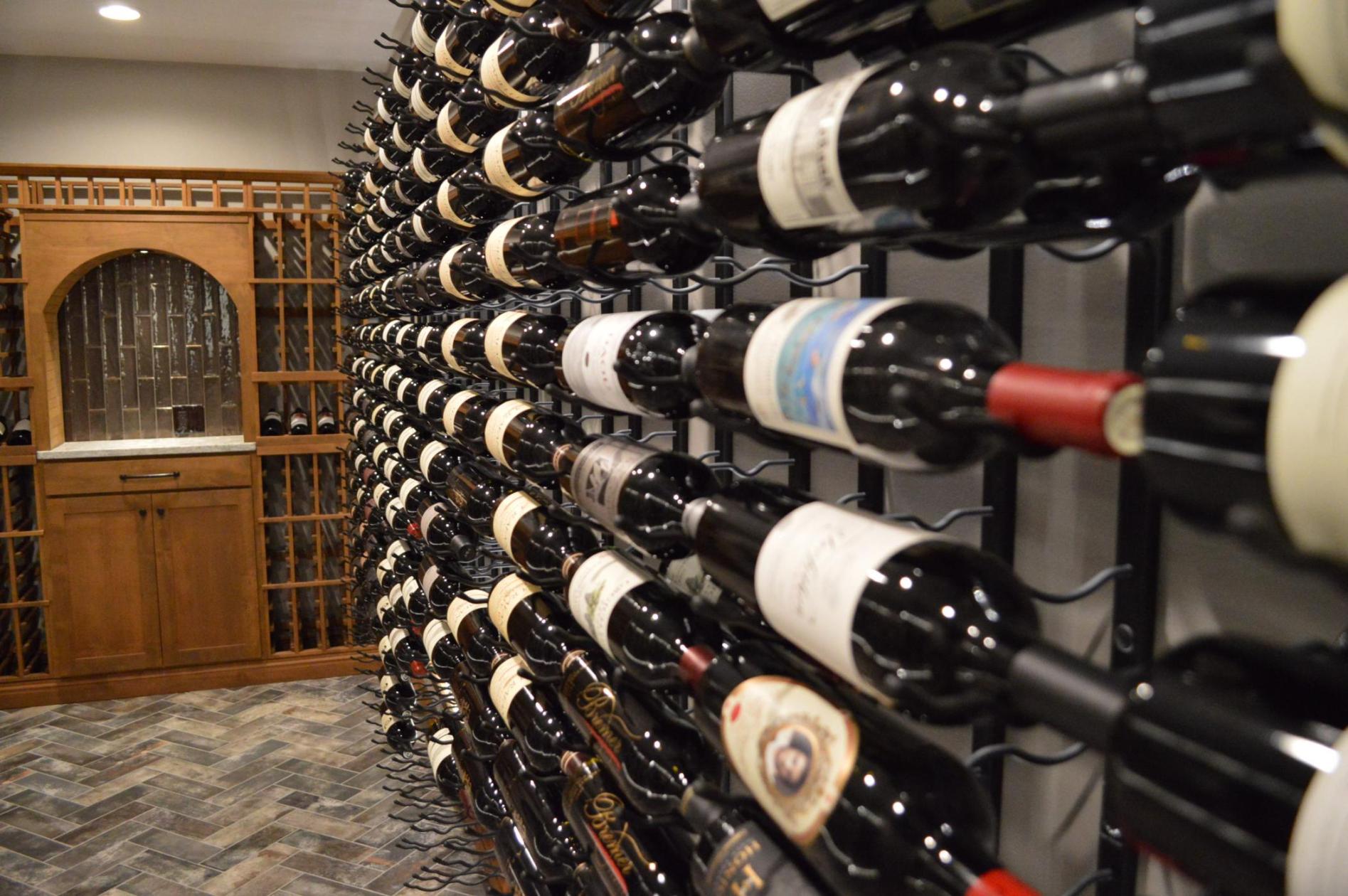
One of the easiest details to see in a finished cellar is how much of the wall shows between bottles. A single row of metal pegs leaves the wall finish visible and gives each label room. Closely spaced wooden cubbies create a different pattern, with the bottle ends facing the room. You can use both in the same cellar. In our contemporary home wine cellar walkthrough, metal racks line the side walls, while a wood arch frames a tasting counter at the back. From the doorway, you can see where to browse and where to set down a bottle.
Take a look at some examples of the beautiful contemporary and modern designs Tim Wright and his Harvest team have created for our awesome clients! Call us at (804) 467-5816 in the Richmond area and (443) 451-4411 in the Baltimore area.
Maryland Contemporary Residential Wine Cellar Design
This stunning modern wine cellar was completed by the Harvest team of experts. It features clean lines and angles, glass walls, and clear acrylic trays to hold the beautiful wine bottles in a label-forward orientation.


Look at the photo taken from the round tasting table. From a seated position, you see the sides of the bottles through the glass. The clear trays leave the back panels visible between rows, and the grapevine artwork gives the eye somewhere to rest beside the display. If your cellar will face a dining room, try looking at the proposed rack height from your usual seat. A display that looks right when you’re standing at the glass can sit above eye level during dinner.
Which layout fits your space and collection?
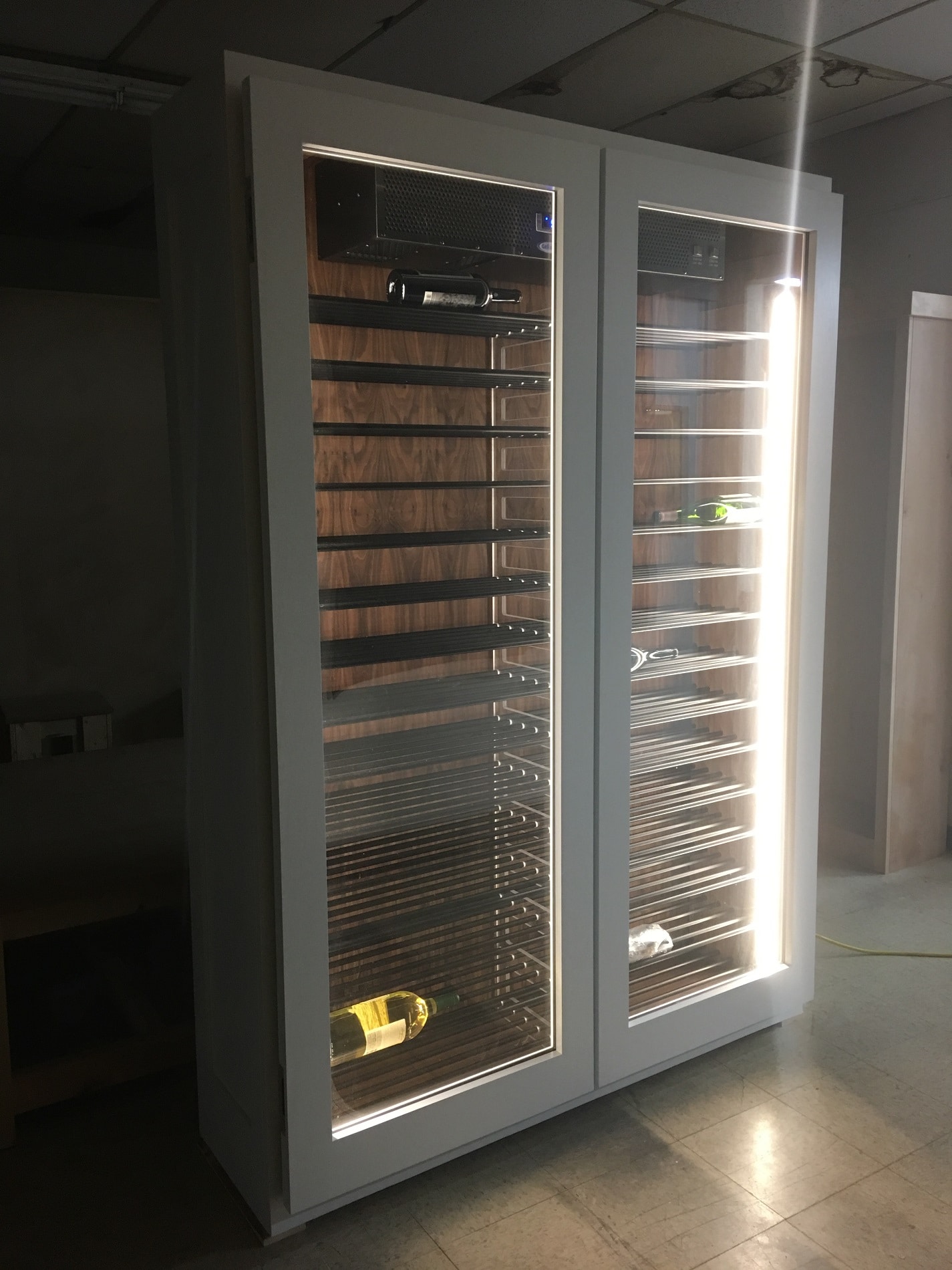
A wine wall or hallway closet. A shallow enclosure lets you browse from the adjoining room. Start by measuring the hallway with the cellar doors open. You need space to stand in front of a rack, lift a bottle free and turn around with it. For a dining room, make the same check with the chairs pulled out. The white-framed hallway closet in the gallery below shows how a wine display can fit at the end of a hall.
An under-stair wine cellar. The slope determines where the tallest racks can stand and which bottles you can reach from the door. Plan the entrance at the taller end where possible, then work down the slope. At the lowest point, check whether your hand can reach the back row before assigning bottles to it. See how the glass follows the stair line in our under-stair wine cellar in Keswick.
A walk-in wine room. A walk-in layout gives you more than one wall to work with. You might dedicate a side wall to everyday wines, reserve lower bins for repeat purchases and keep a counter clear for unpacking a case. If two people often choose wine together, allow space for one to pass while the other is at the rack.
A restaurant wine display. Guests may see the wine from a table, while servers approach it from an entirely different angle. Choose the display rows from the guest’s viewpoint, then check door locations against the route staff use during service. The wine cellar at CUT in the Rosewood Hotel shows how a long run of glass-front storage can become part of the dining room.
How should you arrange the bottles?
Before choosing a rack system, pull a few bottles from your own collection. Include a bottle you open often, a wider sparkling-wine bottle and any large format you buy regularly. These will tell you more about the spacing you need than a bottle count alone.
| If you want to… | Consider this arrangement |
|---|---|
| Read labels through the glass | Use label-forward racks on the wall you see most often. Turn a sample bottle sideways at the proposed height to check the view. |
| Store several bottles of the same wine | Group them in a bin or a deeper rack. Keep different wines in separate rows so you can reach the one you want. |
| Feature a few special bottles | Set aside an angled display row near eye level. Check the lighting with a bottle in place so glare doesn’t obscure the label. |
| Make room for Champagne or magnums | Size part of the racking around your widest and longest bottles. Leave enough space to lift each one out. |
What needs to be planned before construction?
Glass, lighting and cooling decisions affect one another. Decide how much glass you want early so your designer can account for the enclosure when sizing the cooling system. A dining-room wine wall and an interior walk-in room can hold a similar number of bottles and still need different cooling equipment. Harvest’s guide to wine cellar heat-load calculations explains what goes into that decision.
The drawings should also show where the doors swing, how the cooled enclosure will be insulated and sealed, where the equipment will release heat and how a technician will reach it later. For wall-mounted racks, confirm the backing and attachment locations before the wall is closed. It’s much easier to provide support at that stage than to open a finished wall after the racks arrive.
For a cellar that faces a living or dining area, check the lighting at night. Stand where you’ll usually see the collection and turn on the surrounding room lights. A fixture reflected in the glass can draw more attention than the bottles. Testing the position and angle of a sample light gives you a chance to adjust it before installation.
Commercial and Residential Contemporary Wine Cellar Design Ideas
Compare the wide views with the close-ups in this gallery. The Rosewood Hotel photos show the scale of a full glass-front installation. The wood display row shows a detail you could borrow for a much smaller collection. In the under-stair photos, look at the empty racks first, then the stocked cellar. The two views make it easier to picture how much of the room you’ll see through the glass once your own bottles are in place.





Plan your contemporary wine cellar with Harvest
If you have a space in mind, a photo from the doorway and a few rough dimensions are a good place to start. Tell us about the bottles you collect, how many you’d like to store and which gallery detail caught your eye. A photo of a rack you like is often the clearest way to begin that conversation.
These photos show a few more of the remarkable wine storage projects that Harvest has been able to work on. Are you curious about a modern and contemporary wine cellar design for your home or business? Call us at (804) 467-5816 in the Richmond area or at (443) 451-4411 in Baltimore, or just click here to get our experts started on your own custom quote!